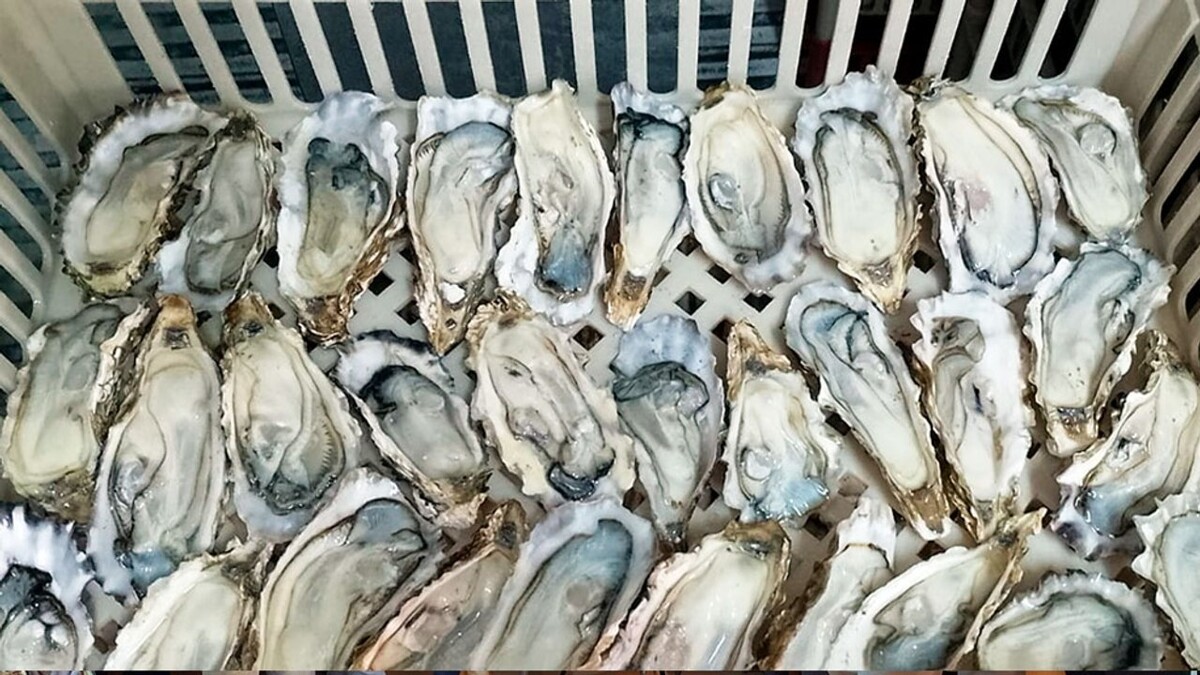
Researchers from the National Council for Scientific and Technical Research (CONICET) have developed a pilot project to produce the first national oyster sauce, made from the Pacific oyster Magallana (Crassostrea gigas), an invasive species affecting the coastal ecosystems of southern Buenos Aires province. According to the Argentine News Agency, the project is being developed in conjunction with the company Cultivo Ostras SAS from the firm Ostras de la Patagonia, and is advancing towards its industrial approval. This opens up a new line of sustainable production with regional and national reach, involving the municipalities of Patagones and Bahía Blanca. The project was led by the Argentine Institute of Oceanography (IADO, CONICET–UNS), together with the Pilot Plant of Chemical Engineering (PLAPIQUI, CONICET–UNS) and the Institute of Biological and Biomedical Sciences of the South (INBIOSUR, CONICET–UNS), belonging to CONICET Bahía Blanca. «Finding alternatives and added value for a biological product is a challenge that can only be achieved with interdisciplinary contributions, and we are achieving it thanks to the articulated work between the scientific sector, the company and public financing,» Botté stated. The Pacific oyster From CONICET they explain that the Pacific oyster established itself on the coast of Buenos Aires province from 1982, especially in the district of Patagones, and its expansion threatens the ecological balance of natural reserves. It was originally introduced in Bahía San Blas and due to its dispersion in the coastal area of southern Buenos Aires, it has begun to have consequences on tourist beaches such as Pehuen Có and Monte Hermoso and on marine ecosystems of great importance such as the Bahía Blanca estuary. «The challenge was to transform an environmental problem into a productive opportunity, and we are advancing on that path,» the researchers stated.